2023 - 2025

I broke the habit

Sole Product Designer at the startup

Context

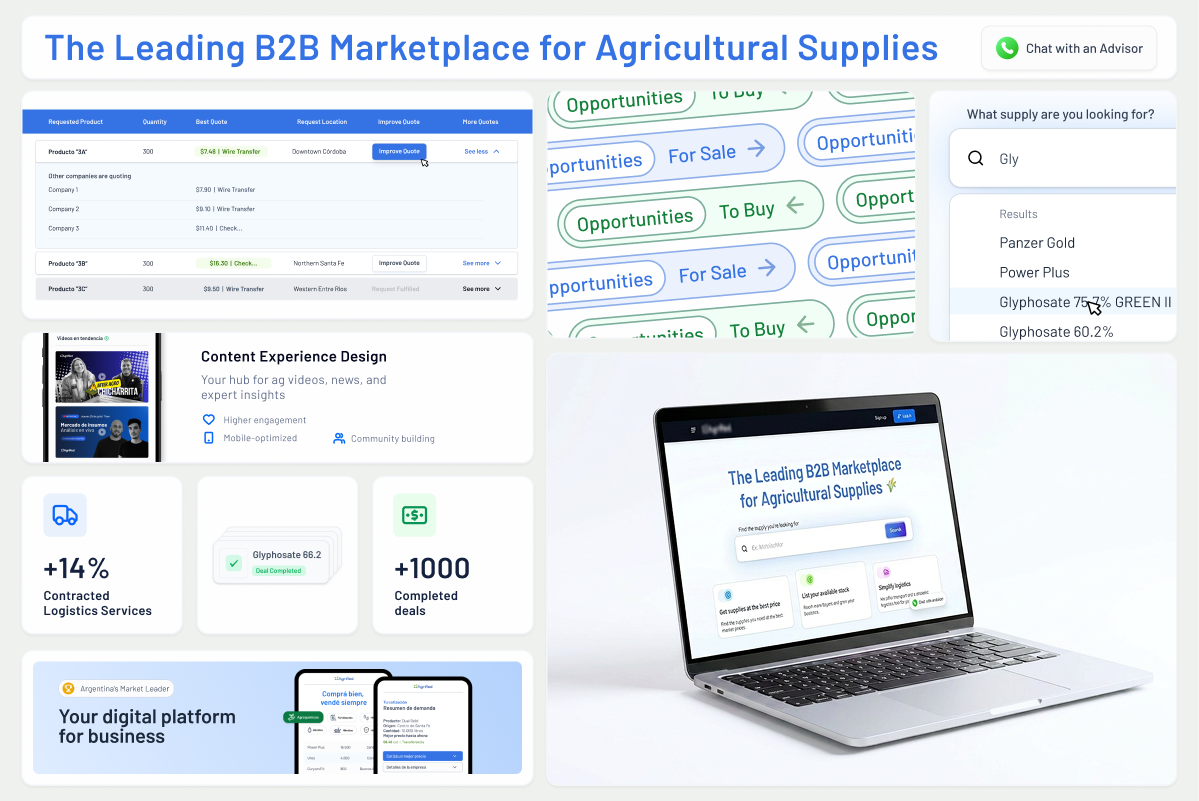
AgriRed is a B2B marketplace where companies buy and sell agricultural supplies.

The challenge began when the sales team started receiving a high volume of inquiries about products that were already listed on the platform, but users were unable to find them.

Problem: Users couldn’t find what already existed

Interviews, conversations with the sales team and usability testing revealed clear patterns:

  • Users had a culturally ingrained habit of manually browsing supply and demand tables, a legacy of a market niche traditionally driven by catalogs and stock lists
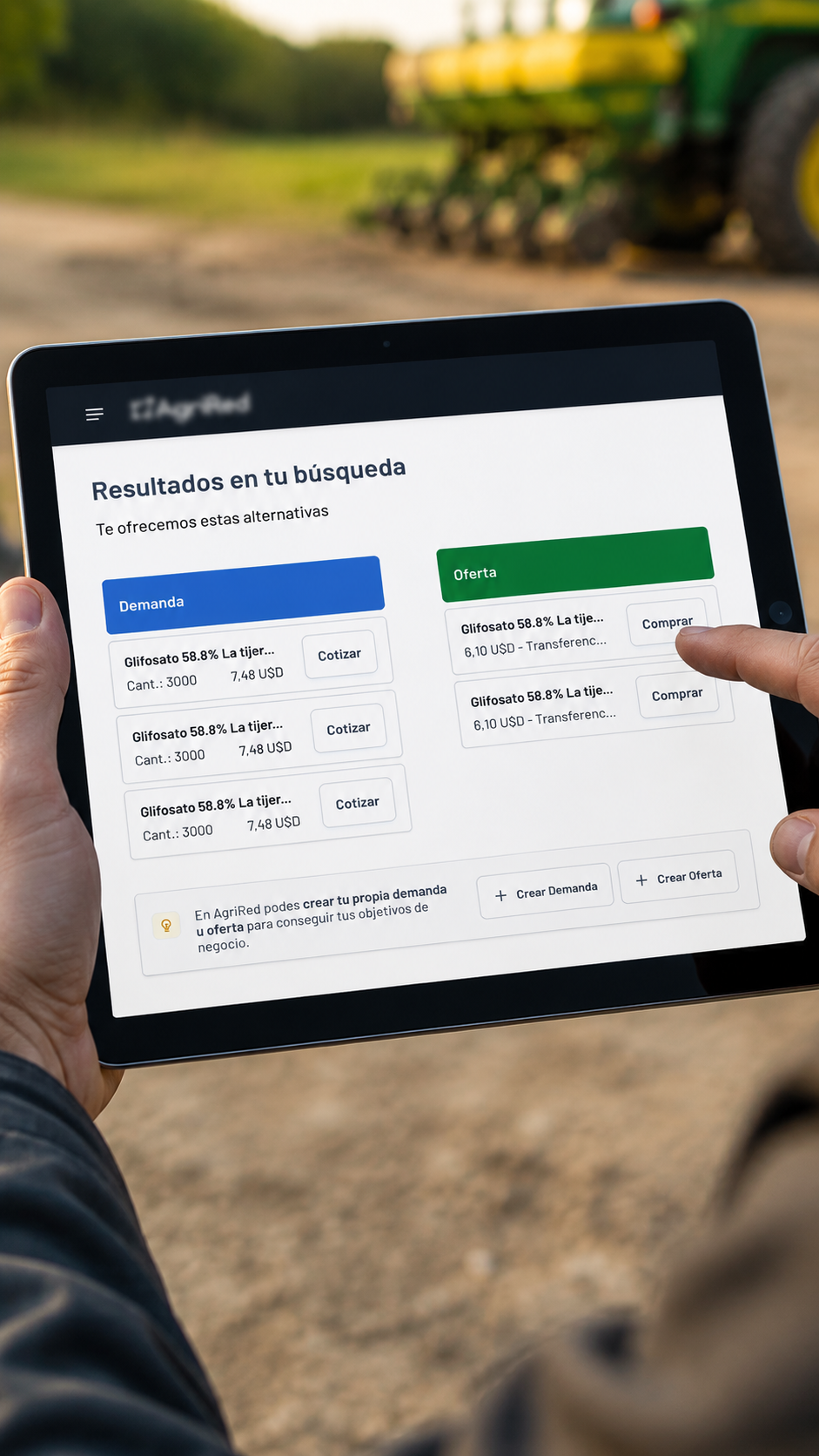
  • The search results logic was inconsistent: it mixed offers and requests, creating confusion about which action to take (among other inaccuracies)
  • The lack of guidance led to wasted time, misinterpretations, and a growing volume of sales inquiries for tasks that should have been self-service.
An illustrative sketch of a flower

Solution: Turning search into the natural way to navigate

The first intervention was operational: adding a filtering system to the tables to reduce immediate friction. It worked, but the underlying problem remained.

To address the root cause, I proposed a deeper intervention:

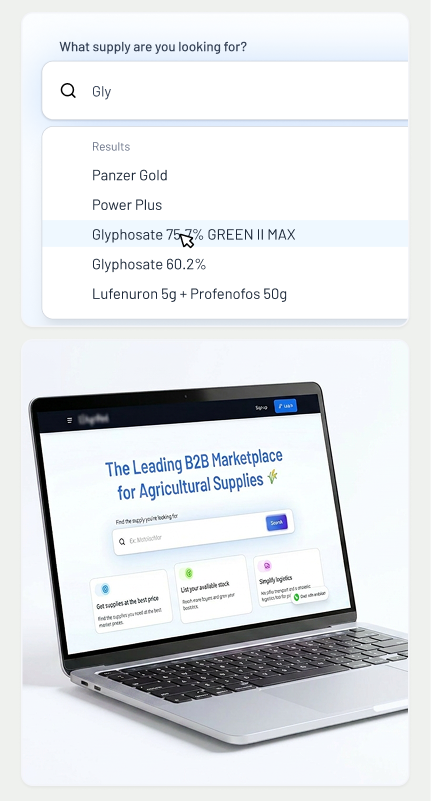
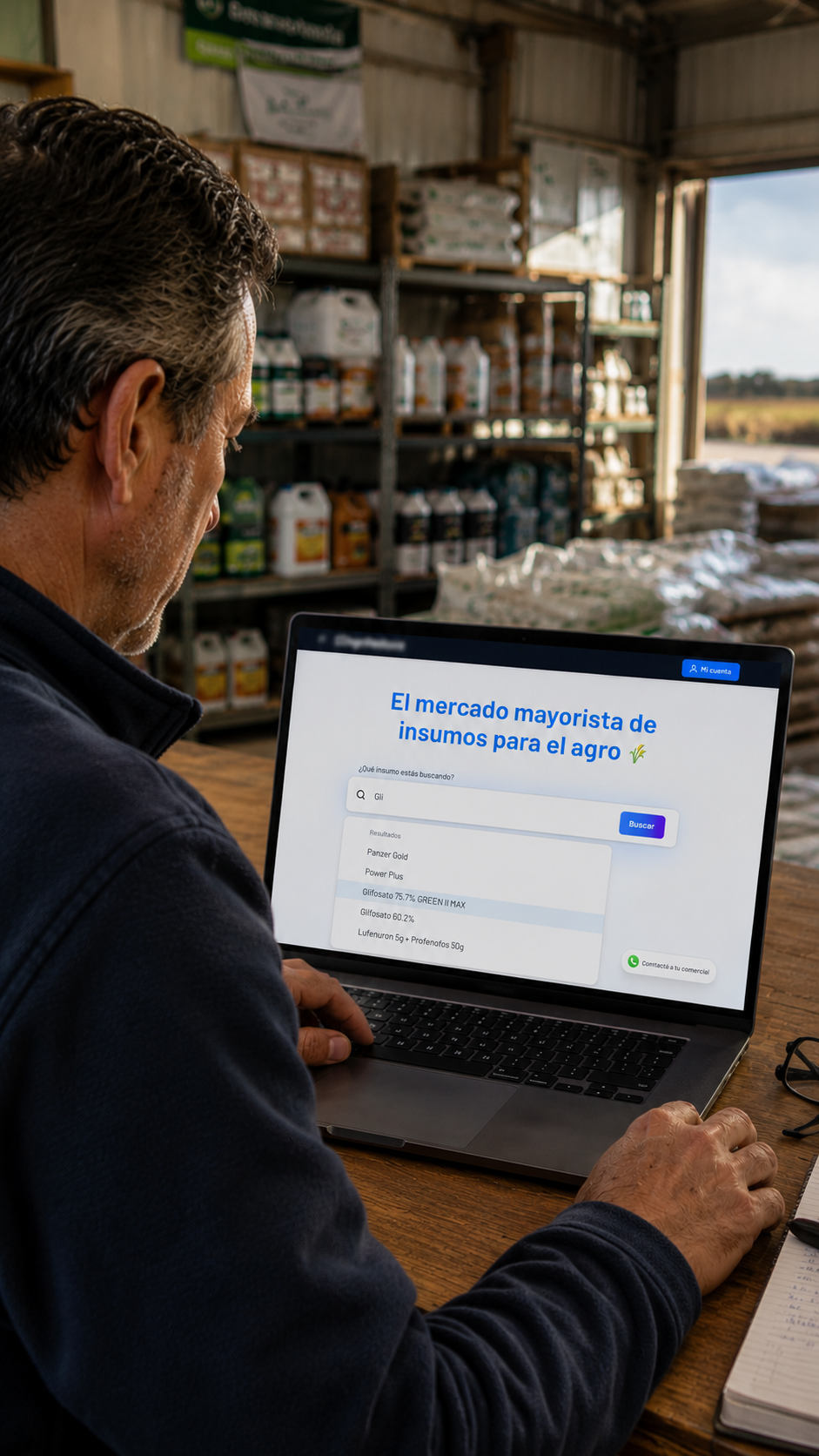
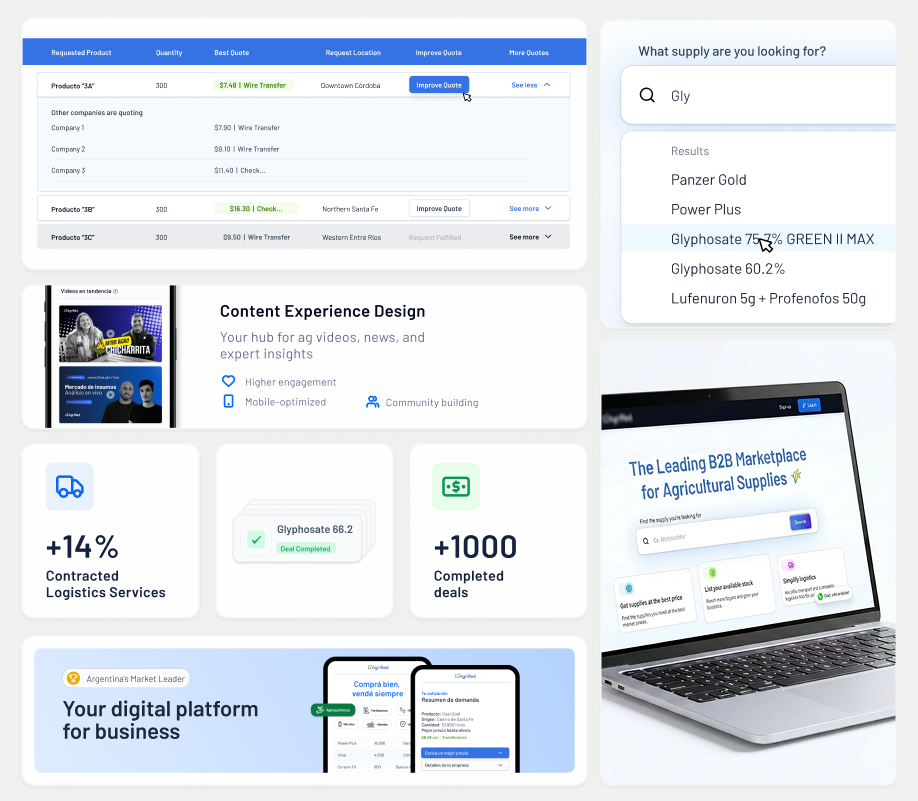
  • Positioning the search bar as the central entry point of the journey, giving it a leading role in decision-making
  • Refining the results logic so the platform better interprets user intent: if users search for offers, they see offers; if they search for demand, they see demand. We also optimized text autocomplete
  • Reorganizing the home page by integrating search into the hero section, clearly communicating from the start that this is the most efficient way to operate
  • By making search the core of the experience, we restructured the main page with storytelling and UX writing–optimized copy to reinforce this cultural shift in how users operate
  • In collaboration with development, we defined how this more robust search engine will enable future insights, such as most-searched terms, regional variations, and seasonal demand signals.
  • Reduced workload for the sales team

    Fewer questions about already listed products allowed the team to focus on higher value opportunities.

  • Faster product discovery

    A search centered experience replaced complex tables, helping users reach relevant products more efficiently.

  • Prepared for smarter growth

    Search behavior became a valuable source of market intelligence and future business opportunities.

“What used to take several calls now takes a few clicks.”

AgriRed Client´s

Owner of an agricultural supply store

Tomas Rioboo

I make complex products feel obvious.

2023 - 2025

I broke the habit

Sole Product Designer at the startup

Context

AgriRed is a B2B marketplace where companies buy and sell agricultural supplies.

The challenge began when the sales team started receiving a high volume of inquiries about products that were already listed on the platform, but users were unable to find them.

Problem: Users couldn’t find what already existed

Interviews, conversations with the sales team and usability testing revealed clear patterns:

  • Users had a culturally ingrained habit of manually browsing supply and demand tables, a legacy of a market niche traditionally driven by catalogs and stock lists
  • The search results logic was inconsistent: it mixed offers and requests, creating confusion about which action to take (among other inaccuracies)
  • The lack of guidance led to wasted time, misinterpretations, and a growing volume of sales inquiries for tasks that should have been self-service.
An illustrative sketch of a flower

Solution: Turning search into the natural way to navigate

The first intervention was operational: adding a filtering system to the tables to reduce immediate friction. It worked, but the underlying problem remained.

To address the root cause, I proposed a deeper intervention:

  • Positioning the search bar as the central entry point of the journey, giving it a leading role in decision-making
  • Refining the results logic so the platform better interprets user intent: if users search for offers, they see offers; if they search for demand, they see demand. We also optimized text autocomplete
  • Reorganizing the home page by integrating search into the hero section, clearly communicating from the start that this is the most efficient way to operate
  • By making search the core of the experience, we restructured the main page with storytelling and UX writing–optimized copy to reinforce this cultural shift in how users operate
  • In collaboration with development, we defined how this more robust search engine will enable future insights, such as most-searched terms, regional variations, and seasonal demand signals.
  • Reduced workload for the sales team

    Fewer questions about already listed products allowed the team to focus on higher value opportunities.

  • Faster product discovery

    A search centered experience replaced complex tables, helping users reach relevant products more efficiently.

  • Prepared for smarter growth

    Search behavior became a valuable source of market intelligence and future business opportunities.
“What used to take several calls now takes a few clicks.”

AgriRed Client´s

Owner of an agricultural supply store

Tomas Rioboo

I make complex products feel obvious.
2023 - 2025

I broke the habit

Sole Product Designer at the startup

Context

AgriRed is a B2B marketplace where companies buy and sell agricultural supplies.

The challenge began when the sales team started receiving a high volume of inquiries about products that were already listed on the platform, but users were unable to find them.

Problem: Users couldn’t find what already existed

Interviews, conversations with the sales team and usability testing revealed clear patterns:

  • Users had a culturally ingrained habit of manually browsing supply and demand tables, a legacy of a market niche traditionally driven by catalogs and stock lists
  • The search results logic was inconsistent: it mixed offers and requests, creating confusion about which action to take (among other inaccuracies)
  • The lack of guidance led to wasted time, misinterpretations, and a growing volume of sales inquiries for tasks that should have been self-service.
An illustrative sketch of a flower

Solution: Turning search into the natural way to navigate

The first intervention was operational: adding a filtering system to the tables to reduce immediate friction. It worked, but the underlying problem remained.

To address the root cause, I proposed a deeper intervention:

  • Positioning the search bar as the central entry point of the journey, giving it a leading role in decision-making
  • Refining the results logic so the platform better interprets user intent: if users search for offers, they see offers; if they search for demand, they see demand. We also optimized text autocomplete
  • Reorganizing the home page by integrating search into the hero section, clearly communicating from the start that this is the most efficient way to operate
  • By making search the core of the experience, we restructured the main page with storytelling and UX writing–optimized copy to reinforce this cultural shift in how users operate
  • In collaboration with development, we defined how this more robust search engine will enable future insights, such as most-searched terms, regional variations, and seasonal demand signals.
  • Reduced workload for the sales team

    Fewer questions about already listed products allowed the team to focus on higher value opportunities.

  • Faster product discovery

    A search centered experience replaced complex tables, helping users reach relevant products more efficiently.

  • Prepared for smarter growth

    Search behavior became a valuable source of market intelligence and future business opportunities.

“What used to take several calls now takes a few clicks.”

AgriRed Client´s

Owner of an agricultural supply store

Tomas Rioboo

I make complex products feel obvious.